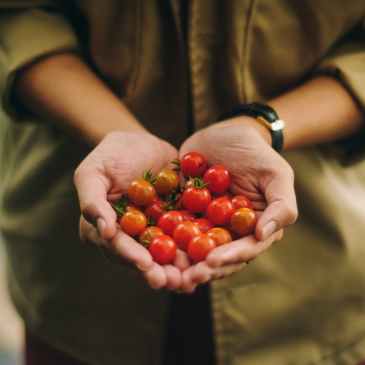
Food is one of our most basic needs. Although modern technology and trade with faraway places have lowered the cost and increased the quantity of food in the United States, buying and producing at least some of our food locally has many advantages. Some of the benefits include increased food security, savings on transportation costs, and greater nutritional density. Besides, fresh food just tastes better! Local food interdependence not only fosters peace of mind, but healthier, closer-knit communities as well.
Purchasing locally produced food is of great benefit to the local economy (money spent on local businesses is more likely to stay in local economies) and informs local growers as to what they should be producing in order to satisfy the market in their area. We want our local farmers thriving so they can continue to grow our food and make a living wage! Why? Because local food sources are a unique blessing in turbulent times of rising fuel costs (which affect the cost of shipping food to stores), and the reality of supply chain interruptions and failures. If you have discovered local sources for your staple foods—fruit/veggies, dairy/meat, eggs, and even grains/flours—then you have made your family’s food supply more secure.
The only source of food more local than your nearby farmer is the garden you tend in your own backyard. With education and experience, you can grow not just some of your own food, but most or all of your own food. You don’t need acres of land to grow fruits and veggies; people living on small lots can produce surprisingly large amounts of food. With education and ingenuity, even apartment dwellers can learn to grow tasty produce!
By purchasing locally grown foods and/or growing our own, we gain a myriad of skills that will contribute to our food safety, as well as our general health. One benefit of acquiring food in these ways is that we learn to eat seasonally. Oranges and avocados in winter purchased from the grocery chain are delightful, but they’re not the only delight to be had. Learning to harvest, cook, and consume foodstuffs in the season that they’re grown is enormously satisfying. Do so also ensures that we are eating foods at their peak, when they are truly ready to be harvested and are the most nutrient dense. The oranges and avocados you find in the store were picked when they were still firm but, sadly, before they were ripe. This is done in order to ensure that the foods will survive the shipping process and arrive unbruised to your shopping aisle.
Resources
Guide to Buying Locally
Start small with local farmer’s markets, the chamber of commerce, your state’s local agriculture initiative (some have a catchy phrase like “Missouri Grown”), health food stores that carry locally grown produce, pickyourown.org, word-of-mouth, or a simple Google search with keywords like “local farms,” “meat processors,” “dairies,” “farm fresh eggs,” etc.
Even people living in large cities can buy local food by seeking out nearby farmer’s markets and artisanal producers of things like breads and cheese. These items are not as expensive as you might first assume, particularly if you arrange standing or bulk orders. If you live in a state with very friendly cottage food laws, this can be a very economical way to purchase locally produced baked goods, cheeses, jams, etc.
Cottage food laws allow for micro-businesses (those usually run by one person or by only a few) to produce valuable food products in small batches for very local markets. Because they have far fewer overhead costs than larger businesses, they can usually charge their customers a bit less. For example, we have had great success finding a cottage producer of artisanal sourdough bread at a very low cost by arranging a standing order every month. This arrangement provides steady income for the baker and a steady supply of delicious bread for us!
Another kind of “standing order” option is that of CSA (Community Supported Agriculture) programs that provide consumers with boxes of seasonal foods on a set schedule. The farmers get the security of a dependable seasonal fee and an incentive to produce what their customers really want to eat; consumers get the benefit of delicious food grown in their area. Often, the consumer and the farmer develop great relationships that provide not only friendship but useful feedback so that these systems are constantly self-correcting for the market, the producer, and the individual. This isn’t as likely to happen with large chain grocery stores.
Other options for purchasing local foods, depending on your area and the legalities involved, are workshare and herdshare options. In workshare programs, the consumer trades their time and labor on the farm for a share of what’s produced. This not only provides food, but an incredible education as to where food comes from and how to produce it. Workshare programs are difficult for producers (because of turn over realities and time invested in education), so if you have a local grower willing to run such a program, learn to work with them with respect.
Another option for those living in cities is the herdshare option. A herdshare is an arrangement between a farmer and the consumer who is also an owner of livestock on the farm. As a shareholder (member) of the herdshare operation, the consumers are entitled to obtain milk, meat, offal, and other profits of the livestock in proportion to their interest in the herd. This isn’t legal in all states in the U.S. but, again, if you can find a program in your area, be sure to be respectful of the farmer for being willing to do it. We can’t all live on a farm, but we can surely support those who do, while also providing our families with quality, local food.
Guide to Growing Food
The truth is that the most effective way to learn to grow your own food is to simply begin. Right now. This year. Pick a vegetable you love and learn to grow that one. Next year, pick another to add to the first. And so on until you have a garden full of foods you enjoy eating. Don’t feel like you have to know everything to simply start growing something. As the saying goes, an imperfect something is better than a perfect nothing! No need to worry that you’ll miss instruction that is important in your education because all the principles are connected and you’ll learn each one as you need it.
Having said that, however, one of the best pieces of advice is to learn all you can about permaculture. The word “permaculture” is a contraction of the words “permanent” and “agriculture.” In the words of one of the movement’s founders, Bill Mollison, permaculture is “the conscious design and maintenance of agriculturally productive ecosystems which have the diversity, stability, and resilience of natural ecosystems.” There are a lot of fancy eco-words in there that basically mean permaculture is the practice of designing gardens (and other food-producing systems) so that they are self-sustaining and productive in the same way that nature is self-sustaining and productive.
You will save yourself a lot of time, money, effort, and tears if you’ll simply begin or advance from where you are in your gardening education on the path of permaculture. As you learn about the basic ethics of permaculture—earth care, people care, and sharing your abundance—you will see how the time and energy you invest in producing your own food can be organized and designed to be self-sustaining and bountiful.
Among other things, you will also learn:
- To set meaningful and attainable garden goals that benefit yourself, your family, and your community.
- To see patterns of growth and sustainability in nature, and then mimic those patterns in gardens that are designed to produce abundance while utilizing local and natural resources like sun, water, air, and soil.
- To replace synthetic fertilizers, herbicides, and pesticides with simple items like mulch, compost, and techniques as straightforward as placing your garden in the correct spot on your land.
- And so many more principles that will take the dream of growing your own food and make it an attainable, designable, practical reality. Right now. This year.
Permaculture Books
The Suburban Micro-Farm, by Amy Stross
Gaia’s Garden, by Toby Hemenway
Practical Permaculture, by Jessi Bloom and Boehnlein
General Gardening Books
The First-Time Gardener: Growing Vegetables, by Jessica Sowards, of Roots and Refuge Farm
The Week-by-Week Vegetable Gardener’s Handbook, by Jennifer and Ron Kujawski
The Family Garden Plan: Grow a Year’s Worth of Sustainable and Healthy Food, by Melissa Norris
Websites
Tenth Acre Farm, by Amy Stross (permaculture)
Grow, Forage, Cook, Ferment, by Colleen Codekas
Roots and Refuge Farm, by Jessica Soward
Buying and Growing Food Locally, by Tessa Zundel
Why Buy Local Food? It’s Healthier for You and Better for the Environment
Classes
The various permaculture design courses, particularly the mini-course created for backyard growers/homesteaders, at Midwest Permaculture
The Permaculture Women’s Guild
 LET LIBERTY PREVAIL